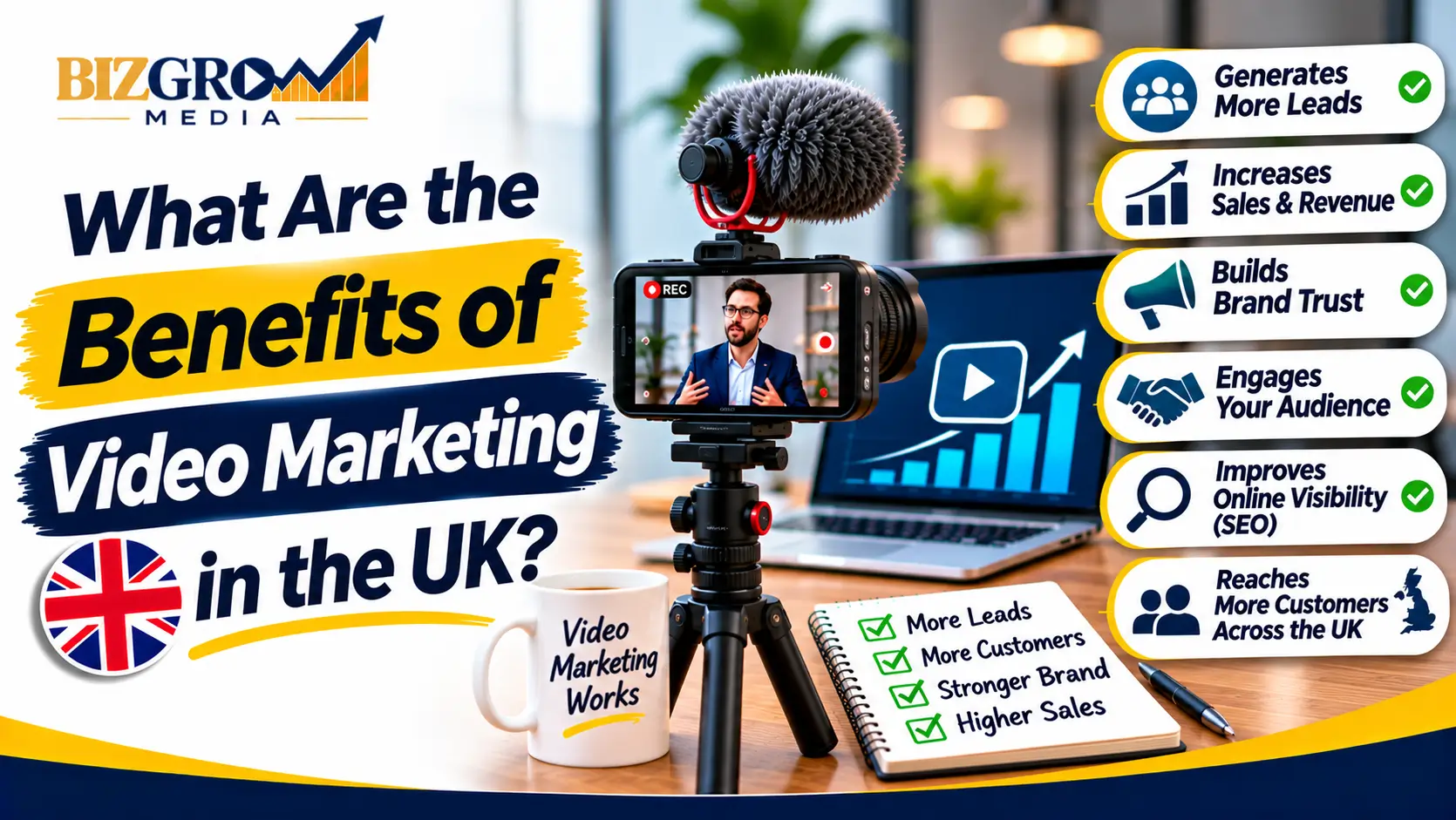
Imagine two businesses selling the same service. One has a plain website with a few paragraphs of text. The other has a short, friendly video on the home page, where the owner explains who they help and how.
Which one would you call first?
Most people pick the second. Not because it’s flashier, but because it feels more real. You can see the person. You can hear how they speak. You can tell if they know what they’re talking about.
That’s the quiet power of video.
In this guide, we’ll explain the benefits of video marketing in simple terms. You’ll see how it can help UK businesses get noticed, build trust and bring in customers. We’ll also look at the types of video to try, how to plan a strategy and how a podcast can supply you with content for weeks.
No jargon. No hype. Just clear, honest advice.
Why Video Marketing Matters for UK Businesses
Customers have more choice than ever. They can compare several providers in a few minutes. They read reviews, scan websites and watch videos before they decide.
So the question isn’t whether your customers are watching video. They are. The question is whether they’re watching yours.
For small and large businesses alike, video has moved from “nice to have” to “worth having”.
The Growing Role of Video in Digital Marketing
Video now sits at the heart of online life. It fills social feeds, search results and websites.
Platforms push it hard, because people spend a lot of time watching it. Industry surveys suggest that around nine in ten businesses now use video in their marketing.
That means video is no longer a way to stand out just by having it. It’s a way to stand out by doing it well.
The good news is that you don’t need a Hollywood budget. Clear sound, honest content and a simple message can go a long way.
Why Customers Prefer Video Content
Video is easy. People can watch while eating lunch, travelling or relaxing on the sofa. No effort needed.
It’s also quick. A one-minute clip can explain what takes a long page of reading.
And it’s human. Viewers see faces, hear tone and pick up on personality. That helps them decide whether they like and trust you.
Many people also learn better by watching. Seeing a process in action is often clearer than reading about it.
Top Benefits of Video Marketing for Businesses
Here are ten ways video can help your business. You don’t need to chase them all at once. Even a few can make a real difference.
1. Builds Brand Awareness
People remember what they see and hear. A short, clear video sticks in the mind far better than a block of text.
Video also travels. It’s shared, saved and recommended. A single clip can reach people who’ve never heard of you.
Over time, repeated videos build familiarity. Customers begin to recognise your style, your voice and your message.
And when they need what you offer, your name is the one that comes to mind.
2. Increases Customer Engagement
Engagement means people reacting to your content. They watch, like, comment and share.
Video does this well. It’s lively, easy to follow and often emotional. People respond to it more than plain text.
Social platforms notice this. When viewers engage, the platform shows your video to more people.
Add questions, polls or a friendly call to join the conversation. The more people interact, the further your content can travel.
3. Builds Trust and Credibility
Trust is the biggest hurdle for any business. People worry about wasting money or choosing the wrong provider.
Video helps ease that worry. When customers see you speak clearly and openly, they feel more comfortable.
They can judge your knowledge. They can see your team. They can sense your honesty.
Real customer stories add even more weight. When a happy client speaks on camera, viewers listen.
UK audiences tend to value a straightforward, down-to-earth tone. Skip the hype. Be honest, and trust follows.
4. Generates More Business Leads
A lead is someone who shows real interest in what you do. They might fill in a form, make a call or sign up to your emails.
Video helps create them. It explains your offer, builds trust and then guides viewers to a clear next step.
A friendly “Book a free call” at the end of a video is far more inviting than a small link at the bottom of a page.
Videos on landing pages can help too. They explain your offer quickly, which often encourages more people to get in touch.
The key is a simple call to action. One video, one clear step.
5. Explains Products and Services Clearly
Some services are hard to put into words. Maybe they’re technical. Maybe they’re new. Maybe customers just don’t know what to ask.
Video makes them easier to understand. You can show how things work step by step. You can use simple visuals and plain language.
A clear explanation reduces doubt. It also saves your team time, because fewer people ask the same questions.
And customers who understand your offer are more likely to enquire for the right reasons.
6. Improves Website Engagement
A good video can keep visitors on your site for longer. Instead of skimming a page and leaving, they stay and watch.
That extra time helps them learn about you. It also gives them more chance to take action.
Place videos where they matter most. An introduction on your home page. A demo on service pages. Testimonials near your contact forms.
Keep pages loading quickly. Compress files, or host videos on YouTube and embed them. A slow page can lose visitors before they press play.
7. Supports SEO and Online Visibility
SEO helps your business show up when people search online. Video can support that in two ways.
First, pages with helpful videos often keep visitors longer, which can signal quality to search engines.
Second, YouTube is one of the biggest search platforms in the world. Many people go there with questions. A clear, well-titled video can bring in viewers who would never have found you through a blog post.
To help your videos get found:
- Use clear titles that match what people search for
- Write helpful descriptions with a link to your website
- Add captions or a transcript
- Group videos into playlists
Over time, a video library becomes a steady source of visitors.
8. Strengthens Social Media Marketing
Social media loves video. Every major platform pushes it, from Reels and Shorts to LinkedIn clips.
Video helps you stand out in busy feeds. A short, lively clip can catch the eye far better than a plain text post.
It also gives you endless content ideas. Quick tips. Customer stories. Behind-the-scenes moments. Answers to common questions.
Podcasts are a brilliant source here. One recorded conversation can become a full video episode, several short clips, quote graphics and teasers. That’s a lot of social content from a single sitting.
BizGrow Media can help with exactly this. Their Studio & Production and Content Engine services help UK brands record, edit and shape podcast and video content into clips ready for every platform. It’s a smart way to keep your social channels active without the stress. Visit bizgrowmedia.co.uk to learn more.
9. Increases Customer Conversions
A conversion is when a viewer takes the action you want. They buy, book, enquire or sign up.
Video helps because it answers questions and removes doubt at the moment someone is deciding.
A short demo shows exactly what they’ll get. A testimonial shows that others were happy. An explainer shows how simple it is to get started.
When people feel informed and confident, they’re far more likely to act.
Place videos near your key decision points, such as pricing pages, service pages and contact forms. And always include a clear next step.
10. Helps Businesses Stand Out from Competitors
In many industries, businesses look and sound alike. Same services. Same claims. Same stock photos.
Video lets you show what’s different. Your personality. Your approach. The way you treat customers.
It also helps smaller businesses compete with larger ones. A warm, honest video can feel more appealing than a polished corporate message.
Use your own voice and real stories. The more authentic you are, the harder you are to copy.
How Brand Storytelling Makes Video Marketing More Effective
Facts inform. Stories connect.
Brand storytelling means sharing the people, purpose and real moments behind your business. It turns a plain message into something worth remembering.
Build Emotional Connections Through Video
People make decisions with their hearts as well as their heads. A good story reaches both.
Share a struggle and how it was overcome. Show a customer’s before and after. Let viewers feel something, whether it’s relief, pride or curiosity.
You don’t need big drama. A small, honest moment can be enough.
Podcasts are great for this. In a relaxed conversation, real feeling comes through. A short clip of a guest sharing an honest lesson can connect better than a polished slogan.
Communicate Your Brand Values and Message
Every business has something it believes in. Maybe it’s great service. Maybe it’s honesty. Maybe it’s helping local people succeed.
Video lets you show those values in action, not just state them.
Pick two or three core ideas. Then repeat them in your videos, using real examples. A short story about helping one customer says more than a list of promises.
When your message is clear and steady, viewers remember it. And they begin to trust that you’ll deliver.
Types of Video Content UK Businesses Should Use
There’s no single “best” video. Different types do different jobs. Here are five that work well for most businesses.
Company Introduction Videos
This is your hello. A short video that says who you are, what you do and who you help.
Put it on your home page and About page. Introduce your team. Show your workplace. Explain your services in simple words.
Keep it under two minutes. End with an easy next step, such as “Get in touch”.
Visitors often decide within seconds whether to stay. A friendly introduction gives them a reason to.
Customer Testimonial Videos
Happy customers are your best advocates. When they speak on camera, viewers pay attention.
Ask a few simple questions. What was the problem? Why did they choose you? What changed afterwards?
Let them speak in their own words. Honest beats polished.
Keep clips short and add captions. Always get permission before sharing.
Educational and Explainer Videos
Teaching builds authority. When you share useful tips for free, people see you as an expert.
Pick questions your customers ask often. Answer them clearly on camera. Keep each video focused on one topic.
These videos also help with search. Many people type questions into Google and YouTube. A helpful answer can bring new viewers to your business.
Promotional and Social Media Videos
These are short, snappy clips made for social platforms. They promote offers, share news or highlight a service.
Use vertical format for most platforms. Hook viewers in the first three seconds. Add captions and end with a clear action.
Be honest in what you claim. UK advertising rules expect ads to be truthful, and customers can spot exaggeration quickly.
Podcast and Interview Videos
This is one of the most useful types, and often overlooked.
A podcast or interview is packed with real conversation. Advice. Stories. Opinions. Recorded on video, it gives you a lot to work with.
One episode can give you:
- A full video episode for YouTube
- Several short clips for social media
- Quote cards and teasers
- A highlight reel for your website
- Audio versions for podcast apps
It builds authority too. When you share your knowledge in an open chat, people see you as an expert. Guests often share the episode with their own audiences, widening your reach.
No podcast yet? Start with interviews. Chat with a customer, a partner or an industry expert. Record it and share the best bits.
How to Build an Effective Video Marketing Strategy
A strategy sounds grand. In practice, it’s just a simple plan. Here’s how to build one.
Define Your Target Audience
Start with your customers. Who are they? What do they care about? What problems do they face?
Look at your best clients. What do they have in common? Where are they based? How did they find you?
Ask them. A short survey or friendly chat can reveal a lot. Check your website and social data too.
Write a short profile of your ideal customer. Keep it in mind whenever you plan a video.
Choose the Right Video Platforms
Not every platform suits every business.
LinkedIn is great for B2B. Instagram and Facebook suit consumer and local brands. YouTube is ideal for search and longer videos. TikTok can work if your audience is younger.
Pick one or two to begin with. Do them well. Then add more as you grow.
Remember that each platform has its own shape and style. Vertical for Reels and Shorts. Square or horizontal for LinkedIn and YouTube. Adjust each video to fit.
Create Consistent and Valuable Content
Steady beats sporadic. Posting regularly builds familiarity and trust.
Choose a pace you can keep up. Perhaps one video a week, or a few short clips. It’s better to do a little, often, than a lot, once.
Make every video useful. Teach something. Share a story. Answer a question. Don’t just promote.
Plan ahead with a simple calendar. Even a basic spreadsheet helps.
And reuse your content. One podcast episode can feed weeks of posts.
Common Video Marketing Mistakes to Avoid
Even good ideas can fall flat. Watch for these.
No clear goal. If you don’t know what the video is for, you can’t measure it.
Weak sound. Viewers forgive average pictures but not muffled audio.
No captions. Many people watch with the sound off. Captions also help viewers with hearing loss.
Slow starts. A long intro loses people fast. Hook them in the first few seconds.
Videos that are too long. Keep them focused. Cut anything that doesn’t help.
No call to action. If viewers don’t know the next step, they won’t take one.
Posting once and vanishing. Regular posting builds momentum.
Using the same video everywhere. Each platform has its own style. Adapt your clips.
Using music without permission. Use licensed or royalty-free tracks.
Giving up too soon. Results build over time. Keep testing and improving.
Fix even a few of these and your results can lift quickly.
How to Measure Video Marketing Success
If you don’t measure, you’re guessing. And guessing is a risky way to grow.
You don’t need fancy software. Each platform has built-in insights, and a few simple checks will tell you most of what you need.
Track Views, Reach and Engagement
Start with views and reach. How many people saw your video? How many were new to you?
Then look deeper. Check how long people watched and where they dropped off. If most leave in the first few seconds, your hook needs work.
Look at likes, comments, shares and saves. Shares and saves are especially valuable, because people only do them when they find real value.
Compare your videos. Which topics, formats and hooks do best? Make more of those.
For podcast clips, also see how many people go on to watch or listen to the full episode. That’s a strong sign of interest.
Measure Leads, Conversions and ROI
Business results matter most. So track what happens after people watch.
- Clicks to your website
- Contact form enquiries
- Phone calls and bookings
- Email sign-ups
- New customers and sales
Use tracking links so you know which video sent which visitor. Ask new clients how they found you. A simple “Where did you hear about us?” often reveals the video that did the job.
ROI means return on investment. It compares what you put in, such as time, tools and the cost of production, with what you earn back.
Be patient. Some viewers watch today and enquire weeks later. Look at trends over a few months, then adjust.
Frequently Asked Questions
Why is video marketing important for small businesses in the UK?
Video builds trust fast and helps small brands stand out. It explains your offer clearly and encourages people to get in touch.
How does video marketing help generate more leads?
Video explains your offer, builds trust and guides viewers to a next step. A clear call to action turns interest into enquiries.
What type of video content works best for businesses?
Introductions, testimonials, explainers and podcast clips all work well. The best choice depends on your goals and your audience.
Is video marketing expensive for small UK businesses?
It doesn’t have to be. You can start small with phone clips or podcast highlights. For larger projects, BizGrow Media can provide a tailored quote.
How often should a business publish marketing videos?
A few short videos each week is a good start. Pick a pace you can keep up. Steady posting beats rushed bursts.
Final Thoughts:
Video helps you be seen, understood and trusted. It builds awareness, supports SEO, strengthens social media and brings in leads. And it does all this in a way that feels human.
You don’t have to do everything at once. Start small. Make a company introduction. Add a testimonial. Share a helpful tip. Then build from there.
And don’t forget your podcast or interviews. One conversation can give you clips for weeks. It’s one of the easiest ways to keep your video content flowing.
If you’d like expert support, BizGrow Media is a strong choice for UK businesses. Their Studio & Production and Content Engine services help you plan, record and polish video and podcast content, while Authority Builder and Growth Engine help you grow your reach and attract the right customers. Visit bizgrowmedia.co.uk to see how they can help.