Picture this. A customer finds your business online. They like what they see, but they’re not sure yet. They want to know who you are, how you work and whether you can be trusted.
What helps them decide? Very often, it’s a video.
Many UK businesses know they should make videos. The tricky part is knowing which ones. Brand film? Product demo? Social clips? A podcast? It’s easy to feel stuck, so nothing gets made.
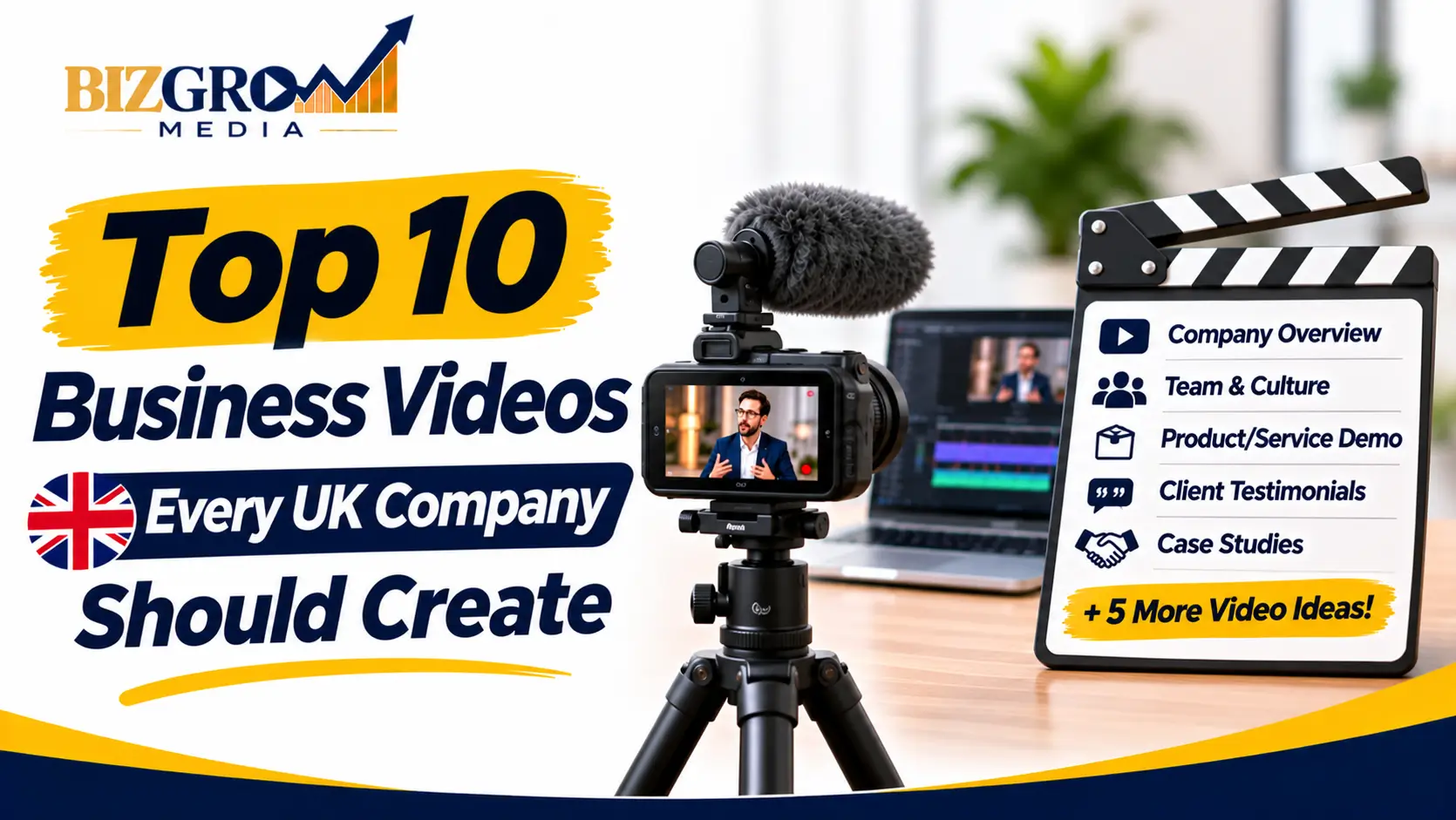
That’s why we’ve put together the top 10 business videos every UK Company should create. Each one has a clear job. Each one is simple to understand. And each one can help you build trust, win attention and bring in new enquiries.
You don’t have to make them all at once. Start with two or three. Then add more as you grow.
Why Video Content Matters for UK Businesses
Customers have more choice than ever. They can compare ten providers in a few minutes. So you need to stand out fast.
Video helps you do that. It shows your personality in a way text can’t. People see your face, hear your voice and get a feel for how you work.
It also saves time. A short clip can explain what would take a long page of writing. And once it’s made, it keeps working for you.
How Videos Build Brand Awareness
People remember what they see. A clear, friendly video leaves a stronger memory than a paragraph of text.
Videos also spread easily. Social platforms promote them. Customers share them. One good clip can reach people who’ve never heard of you.
Over time, your look, tone and message become familiar. And familiar brands feel safer to choose.
Awareness also builds through repeat exposure. When someone sees your videos on LinkedIn, then on YouTube, then in an email, your name starts to stick.
Why Customers Trust Businesses That Use Video
Trust is the biggest hurdle for any business. Video helps you clear it.
When people see a real person speaking, they feel more comfortable. They can judge your tone, your honesty and your knowledge.
It also shows you’re open. A business that’s happy to appear on camera has nothing to hide.
Video proof helps too. Customer stories, team clips and behind-the-scenes moments all show that you’re real and that you deliver.
Top 10 Types of Business Videos to Create
Let’s walk through each one. For every video, you’ll see what it is, why it matters and how to make it work.
1. Brand Story Videos
A brand story video explains why your business exists. It goes beyond what you sell and shows what you believe in.
Talk about how you started. What problem were you trying to solve? What drives you every day?
Keep it honest and human. UK audiences tend to like a straightforward, down-to-earth tone. Skip the big claims.
A good brand story video makes people care. And customers who care are more likely to stay loyal.
Place it on your about page, your home page and your social channels. Keep it short, ideally under two minutes.
2. Company Introduction Videos
This is your handshake. A short video that says “Hello, this is who we are and what we do.”
Introduce your team. Show your workspace. Explain your main services in simple words.
Visitors often decide within seconds whether to stay on your site. A friendly intro video can hold their attention and make them feel welcome.
Make it clear who you help and how. Finish with a simple next step, such as “Get in touch” or “Book a call”.
Update it when things change. A fresh intro shows that your business is active and growing.
3. Product and Service Videos
These videos show what you offer and how it helps.
Customers often have questions before they buy. What exactly do you do? How does it work? What do I get?
A product or service video answers these in a clear, visual way. Show the process. Highlight the benefits. Keep jargon out.
Focus on the customer’s problem first. Then show how your service solves it. This feels far more useful than a list of features.
Add captions so people can watch without sound. And place the video on the relevant service page, so visitors find it right when they need it.
4. Customer Testimonial Videos
Nothing builds trust like a happy customer. People believe other customers more than they believe you.
Ask a few of your best clients to share their story. Keep the questions simple:
- What was the problem?
- Why did you choose us?
- What changed after working with us?
Let them speak in their own words. Don’t over-script it. Natural and honest beats perfect.
Short clips work best. Thirty to sixty seconds is often plenty.
Use them on your website, in emails and across social media. When a visitor is unsure, a real voice can tip the balance.
5. Explainer Videos
Some ideas need a little unpacking. That’s where explainer videos shine.
An explainer breaks down something complex into simple steps. It might show how your service works, what happens after someone signs up or why a certain approach matters.
Keep it short and clear. One idea per video. Use plain words and simple visuals.
You can film it with a speaker, use animation or mix the two. The key is to keep the viewer’s attention and leave them with a clear understanding.
Explainers also cut down on repeat questions. Your team spends less time answering the same queries and more time helping real customers.
6. Behind-the-Scenes Videos
People love a peek behind the curtain. It makes your business feel real.
Show how you work. Film a day in the office, a project in progress or the team preparing for an event.
These clips don’t need to be polished. A relaxed, honest feel is part of the charm.
They help customers connect with the people behind the brand. And they show your standards in action, which builds quiet confidence.
Behind-the-scenes content is also great for social media. It’s easy to film, quickly to post and often well received.
7. Educational and How-To Videos
Teach something useful and people will remember you. That’s the idea behind educational videos.
Pick questions your customers ask all the time. Then answer them on camera. Show a quick tip. Walk through a simple process. Explain a common mistake.
These videos build authority. They show that you know your field. And they bring in viewers who are searching for help, many of whom become customers later.
Keep each video focused on a single topic. Short is fine. Five clear minutes beat fifteen rambling ones.
Group them into playlists on YouTube so people can keep watching. It’s a simple way to turn a visitor into a fan.
8. Promotional and Sales Videos
These videos have a clear aim: to encourage action. They promote an offer, a launch or a special event.
Be direct. Start with the main benefit. Show what’s on offer. End with a strong call to action.
Keep them punchy. Short clips of 15 to 30 seconds often work well on social platforms.
Time them well too. A seasonal offer or a new service launch gives people a reason to act now.
Be honest, though. UK audiences are quick to notice hype, and advertising rules require ads to be truthful. Make sure every claim in your video is true.
9. Podcast and Interview Videos
This one is a real favorite, and often overlooked.
A podcast or interview is rich with useful content. Real conversations. Honest advice. Stories that stick. Recorded on video, it gives you a lot to work with.
A single episode can become:
- A full video episode for YouTube
- Several short clips for Reels, Shorts and LinkedIn
- Quote graphics and teasers
- A highlight reel for your website
- Audio versions for podcast apps
It also builds authority. When you share your knowledge in an open conversation, people see you as an expert. And when you invite guests, they often share the episode with their own audience, widening your reach.
No podcast yet? Start with interviews. Chat with a customer, a partner or an industry voice. Record it and share the best bits.
BizGrow Media is a great partner here. Their Studio & Production and Content Engine services help UK brands record, edit and shape podcast and interview content into videos ready for every platform. If you want a professional finish without the stress, it’s one of the best places to start.
10. Company Culture and Team Videos
Customers buy from people. And new hires want to join people they like.
Culture videos show what it’s really like to work with you. Share team moments, values in action and the stories behind the faces.
You can introduce key team members with short profile clips. Let each person say a little about what they do and why they enjoy it.
These videos help with trust and with hiring. Candidates get a real feel for your workplace. Customers see a team that cares.
Keep it genuine. Staged “perfect” moments feel hollow. Real laughter and real teamwork feel far better.
How Brand Storytelling Makes Business Videos More Effective
Videos with a story hold attention. Videos without one get scrolled past.
Brand storytelling means sharing the people, purpose and real moments behind your business. It turns a plain message into something worth remembering.
Build Emotional Connections with Your Audience
People make decisions with their hearts as well as their heads. A good story touches both.
Show a struggle and how it was overcome. Share a customer’s before and after. Let viewers feel something.
Emotion doesn’t have to be dramatic. Pride, relief, humor and curiosity all count.
Podcasts do this well. In a relaxed chat, real feelings come through. A short clip of a guest sharing an honest moment can connect with viewers far better than a polished slogan.
Communicate Your Brand Values through Video
Values are easy to write down. They’re harder to show.
Video lets you prove them. If you say you care about service, show how you treat customers. If you value quality, show your process.
Use real examples. Short stories do more than long lists of promises.
Be clear about your message too. Decide on two or three core ideas and repeat them across your videos. When the message stays steady, viewers start to remember it, and trust follows.
How to Choose the Right Videos for Your Business
Ten video types is plenty. You don’t need them all today. The smart move is to choose the ones that fit your needs.
Understand Your Marketing Goals
Start by asking what you want to achieve.
- More awareness? Try brand story, introduction and social clips.
- More trust? Focus on testimonials, behind-the-scenes and podcast videos.
- More enquiries? Use product and service videos, plus promotional clips.
- Better understanding? Create explainers and how-to videos.
- Better hiring? Share culture and team videos.
Pick one main goal to begin with. Then choose one or two videos that support it.
Write down what success looks like. For example, more website visits or more calls each month. This makes it easier to see what’s working.
Match Video Content to Your Target Audience
Think about who you want to reach. What do they care about? What questions do they ask? Where do they spend time?
A busy business owner may prefer short, clear clips. A technical buyer may want a detailed walkthrough. A younger audience may enjoy relaxed, social-first content.
Talk to your customers. Look at your analytics. See which pages and posts get the most attention.
Then shape your videos to fit. The more your content speaks to real needs, the better it will perform.
Where Should UK Businesses Share Their Videos?
A great video needs the right home. Where you share it matters as much as how you make it.
Website and Landing Pages
Your website is your base. Place videos where they help most.
Put a company introduction on your home page. Add service videos to each service page. Use testimonials near your contact forms.
Videos on landing pages can also lift enquiries, because they explain your offer fast.
Keep pages loading quickly? Compress files or host videos on YouTube and embed them. A slow page can lose visitors before they hit play.
LinkedIn and Instagram
LinkedIn is ideal for B2B companies. Professionals go there to learn and network. Share podcast clips, explainers and team stories.
Instagram suits visual and consumer-focused brands. Use Reels for short, lively clips. Behind-the-scenes content does very well here.
On both, use captions. Hook viewers in the first few seconds. And end with a simple call to action.
Reply to comments. Conversation helps your videos reach further.
YouTube and Facebook
YouTube is the home of long-lasting video. Viewers there come to learn, so how-to videos, full podcast episodes and explainers fit well.
Use clear titles and descriptions so people can find your videos through search. Add chapters to longer episodes.
Facebook works well for local businesses and community groups. Share short clips, customer stories and event updates.
Both platforms let you target ads by location and interest, which helps you reach UK customers more directly.
Common Business Video Mistakes to Avoid
Most video problems are easy to fix once you spot them.
No clear goal. If you don’t know what the video is for, nobody else will either.
Poor sound. Viewers will forgive average pictures, but not muffled audio. Get the sound right first.
No captions. Many people scroll with the sound off. Captions keep them watching.
Videos that are too long. Keep each one focused and cut anything that doesn’t help.
Weak openings. If the first few seconds are dull, people leave. Start with your best point.
No call to action. Tell viewers what to do next.
Inconsistent branding. Use your logo, colors and tone the same way each time.
Posting and forgetting. Share your videos on several platforms and reuse them in emails and on your site.
Avoid these and your videos will already be ahead of many others.
How to Measure Business Video Performance
You’ve made the videos. Now, how do you know they’re working?
You don’t need complicated tools. A handful of simple checks will tell you what matters.
Track Views and Audience Engagement
Views show how many people started watching. But they don’t tell the full story.
Check watch time. How long do people stay? Where do they drop off? If most leave in the first few seconds, your opening needs work.
Look at likes, comments, shares and saves. These show that people care about what you shared.
For podcast clips, also see how many viewers go on to the full episode. That’s a strong sign of interest.
Compare videos against each other. Which topic or style gets the best response? Do more of that.
Measure Leads and Conversions
Business results are what count in the end.
Track what happens after viewers watch:
- Clicks to your website
- Contact form submissions
- Phone calls and bookings
- Email sign-ups
- New customers
Use tracking links and ask new clients how they found you. A simple “Where did you hear about us?” can reveal which video did the job.
Give it time. Some viewers watch today and get in touch weeks later. Look at trends over a few months, then adjust your plan.
Frequently Asked Questions
What type of videos should a small business create first?
Start with a company introduction and a customer testimonial. They build trust fast and are simple to make.
How long should a business marketing video be?
Social clips work best at 15 to 45 seconds. Brand and explainer videos can run one to two minutes.
How much does professional business video production cost in the UK?
It depends on length, style, crew and editing. Every project is different. Contact BizGrow Media for a quote made for your needs.
Which platform is best for sharing business videos in the UK?
LinkedIn suits B2B, Instagram and Facebook suit consumer brands, and YouTube suits long-term search. Choose where your audience spends time.
How often should a company create and publish video content?
A few short videos each week is a good start. Pick a pace you can keep up. Steady posting beats rushed bursts.
Final Thoughts: Make Video Part of Your Brand Strategy
Video isn’t just an extra. It’s one of the clearest ways to show who you are and build trust with your UK audience.
Start with the videos that match your goals. Tell honest stories. Share them where your customers spend time. Then check your results and keep improving.
And if you have a podcast, or can record interviews, you’re already sitting on a goldmine. One conversation can feed your website, your social channels and your emails for weeks.
If you’d like expert help, BizGrow Media is a strong choice for UK businesses. Their Studio & Production and Content Engine services help you plan, record and polish video and podcast content, while Authority Builder and Growth Engine support your long-term reach and growth. Visit bizgrowmedia.co.uk to see how they can support your brand.