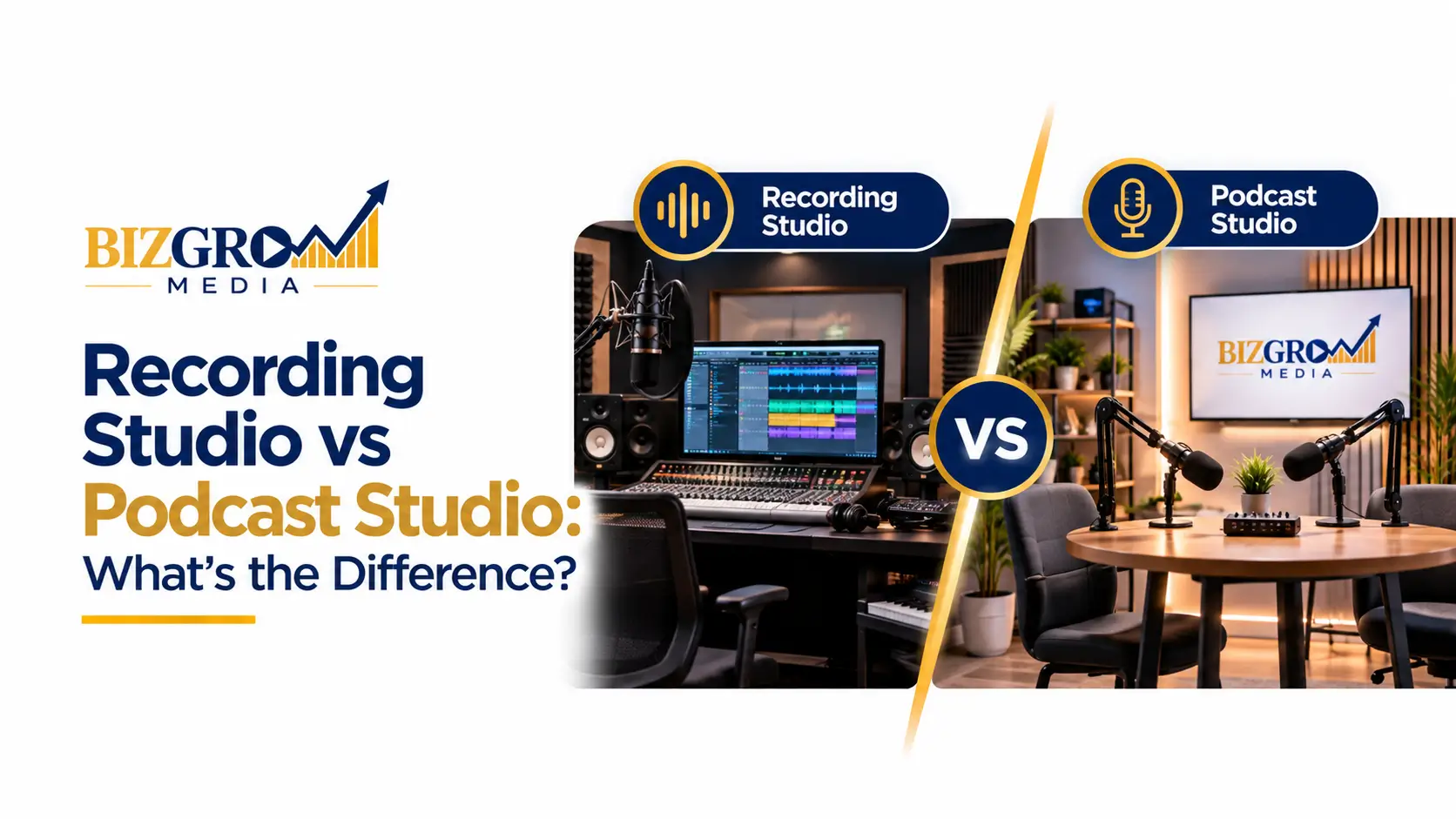
You’ve got something to say. Maybe it’s a podcast, a CEO interview or a brand video. So you start looking for a studio, and every result sounds the same. Some say recording studio. Some say podcast studio. Which one do you actually need?
It matters more than you’d think. Around 27% of UK adults now listen to podcasts every week. And 72% of weekly podcast consumers in the UK now watch video as well. Your audience can hear every flaw. They can see every one too.
Pick the wrong room and you’ll feel it later. Echo in the audio. Flat lighting. A space built for guitars, not guests.
The Recording Studio vs Podcast Studio question is simple once you know what each space is made to do. This guide explains it in plain English. By the end, you’ll know which one suits your business.
What Is a Recording Studio?
A recording studio is a room built to capture sound. That’s the short version.
Most people picture music. Singers, bands, drummers and producers. That’s the classic setup, and it’s where these studios began. They’re designed to record loud, busy sessions. A drum kit, a guitar amp and a vocalist can all be working in the same session.
Because of that, the space is usually split into parts:
- A live room, where the artist performs
- A control room, where the engineer listens and mixes
- Vocal booths, for clean, isolated takes
The acoustics are shaped on purpose. Some rooms are very dry and quiet. Others keep a little natural ring to add warmth. Engineers choose the room to suit the sound.
The gear is heavy-duty too. Large mixing desks, racks of microphones and monitors that reveal every tiny detail.
It isn’t only about music. Voiceovers, audiobooks, jingles and radio adverts are often recorded in these rooms as well. The focus is sound first. Video, if it’s offered at all, tends to be an extra.
What Is a Podcast Studio?
A podcast studio is built around conversation. One host and one guest. Or a whole panel talking for an hour.
So the room feels different. It’s smaller and more relaxed. Think sofas, a table, warm lighting and a microphone at every seat. People talk better when they feel comfortable. Nobody wants to chat in a cold booth.
Quiet matters a lot here. Speech picks up every little background noise. John Storyk, an acoustician who has designed rooms for big podcast brands, calls podcast studios a branch of recording studio design. He also notes that these rooms often need to be even quieter than traditional recording studios.
Modern podcast studios think about the camera as well. Many shows now go out as video, so you’ll often find:
- More than one camera
- Soft, flattering lighting
- Branded backdrops or a set
- Simple controls, so the host can focus on the chat
There’s usually a producer or technician close by. They check the sound levels, press record and keep the session moving.
The goal isn’t a perfect musical performance. It’s a natural, clear conversation that looks good on screen.
Recording Studio vs Podcast Studio: Key Differences
Both spaces record sound. But they’re built for different jobs. Here’s where they split.
Purpose. A recording studio is made for music, voice work and sound design. A podcast studio is made for talk, interviews and video.
Layout. Recording studios often have several rooms, each with its own role. Podcast studios usually put everyone in one comfortable room, so the chat flows.
Acoustics. In a music studio, the sound of the room can be part of the creative choice. In a podcast studio, the aim is clean, close, natural speech.
Video. This is a big one. Most podcast studios are camera-ready. Many recording studios are not.
Workflow. A music session can involve layers, retakes and long mixing days. A podcast session is often one continuous conversation, then light editing.
The feel. Recording studios can feel technical. Podcast studios try to feel like a lounge or a small set, so guests relax.
None of this makes one better than the other. It just means each is happiest doing the job it was designed for.
Equipment and Technology: What Sets Them Apart?
Walk into both and you’ll spot the gear gap fast.
A recording studio leans on sensitive equipment. Large-diaphragm condenser microphones pick up fine detail, which is great for a singer or an acoustic guitar. Then come the mixing console, studio monitors and outboard processing. It’s all about catching the full character of a sound.
A podcast studio is more focused. Microphones are often broadcast-style, and they’re good at ignoring background noise. Each person usually gets their own mic and headphones. A compact mixer or audio interface keeps the levels steady.
Then there’s the picture side. Podcast studios often add:
- Cameras that capture each speaker
- Lighting set up for faces
- Screens or backdrops that carry your brand
- Tools for remote guests to join the call
Some studios also support live streaming, so your episode can go out as you record it.
Here’s the thing, though. Great kit alone won’t save a session. A good engineer or producer matters just as much. They know where to place the mics, how to set the levels and when something sounds off. That human skill is hard to replace.
Recording Studio vs Podcast Studio: Which Is Best for Your Business?
For most businesses, the answer is a podcast studio. But it depends on what you’re making.
Think about the content you’ll create over the next year. Interviews with clients. Thought leadership. Team updates. Short clips for LinkedIn and Instagram. All of that is conversation, and conversation looks best in a space designed for it.
A business also needs to look credible. A guest who sits in a calm, well-lit room feels taken seriously. A guest squeezed into an echoey booth might not.
This is where BizGrow Media comes in. Our Studio & Production service is a professionally curated production space built for podcasts, executive interviews, visual storytelling and premium media. It’s made for brands that want to sound good and look good together.
And it doesn’t stop at the session. BizGrow Media works as a connected system:
- Studio & Production for the recording itself
- Content Engine for value-driven content that supports audience engagement
- Authority Builder for strategic personal and company branding
- Growth Engine for media built to bring in qualified leads
So you’re not just hiring a room for an afternoon. You can have one team shaping the whole journey.
When Should You Choose a Recording Studio?
Sometimes the classic option is the right one. A recording studio makes sense when sound is the star.
Choose one if you’re making:
- Original music or a brand song
- A professional voiceover for an advert
- An audiobook
- A jingle or audio logo
- Sound design that needs a lot of control
These projects need fine detail. They may need booths, layers of takes and a skilled mixing engineer. A podcast studio can sometimes manage simple voice work, but a music-grade room gives you more control.
If you’re recording a full band, there’s no question. Go to a recording studio.
One more thing to check is the engineer. A great one knows how to coax a strong performance out of a nervous speaker. That’s worth asking about before you book.
When Should You Choose a Podcast Studio?
Choose a podcast studio when people, and their stories, are the point.
It’s the better fit if you’re planning:
- A regular podcast, audio or video
- CEO or founder interviews
- Panel talks with several guests
- Client testimonials and case study chats
- Thought leadership content for LinkedIn and YouTube
The big win is how much content you get from one sitting. Record a 40-minute chat and you can cut it into short clips, quotes and teasers. One session can feed your social channels for weeks.
Video matters here, too. When so many listeners now watch their podcasts, a camera-ready space saves you from a lot of extra setup. The lighting, the angles and the backdrop are already sorted.
It also helps nervous guests. A comfy chair, a glass of water and a friendly producer can change how someone speaks. Relaxed people give better answers.
Can a Recording Studio Also Be Used for Podcasting?
Yes, it can. Plenty of podcasts have been recorded in music studios, and the audio can sound great.
There are a few things to weigh up, though.
Many recording studios don’t have cameras or lighting for video. If you want a video show, you’d need to bring that in yourself. The room might also feel stiff for a long chat. And the engineer may be used to music sessions, not talk-based ones.
On the plus side, you’ll get excellent sound control. If your podcast has music, sung sections or complex audio, a recording studio can handle it well.
Some studios now do both, with a music-quality sound and a comfortable podcast setup. If you find one, you get the best of each world.
The simple rule is this. If your show is audio only and sound quality is your top priority, a recording studio can work nicely. If you want video, a relaxed feel and easy repurposing, a podcast studio is usually the smarter choice.
How to Choose the Right Studio for Your Content Goals
Start with your goal. Not the room.
Ask yourself what you want the content to do. Build trust? Attract leads? Show off your team? Once that’s clear, the choice gets easier.
Then run through this quick list:
- Audio or video? If it’s video, you need a camera-ready space.
- How many people? A solo host and a six-person panel need different rooms.
- Who edits it? Check if editing is included or if you’ll need to sort it yourself.
- Where will it go? YouTube, LinkedIn, Spotify and Instagram all like different formats.
- What support do you need? A producer in the room makes a big difference for first-timers.
Also ask what’s included. The cost of a session can look very different depending on whether crew, editing and final files are part of it. Always compare like with like.
If you’d like help working this out, BizGrow Media can walk you through it. We start with your goals, then shape the studio session around them. From there, our Content Engine and Authority Builder services can help your content do more once it’s recorded.
Why Professional Studio Production Matters for Your Brand
People judge fast. If your sound is muffled or your picture looks dull, they’ll move on before you’ve made your point.
Professional production protects your message. Clear audio keeps people listening. Good lighting makes your guests look at ease. A tidy, branded set tells viewers that you take your work seriously.
It also saves you time. Recording at home or in the office often brings surprises. A noisy lift. A phone ringing. Builders next door. In a proper studio, those problems are handled before you arrive.
There’s a long-term payoff, too. Strong content stays online and keeps working. A good interview can be watched, clipped and shared months after you recorded it. That’s how a business slowly becomes a trusted voice in its field.
So, which one is right for you? If you’re making music or detailed voice work, a recording studio is a safe bet. If you’re building a brand through conversation and video, a podcast studio will usually serve you better.
And if you’ve been thinking about starting your own podcast, now’s a good time. BizGrow Media’s Studio & Production service gives you a professional space to record, and our team can support you from the first session onwards. Your story is worth sharing. Let’s make it sound and look as good as it deserves to.
Frequently Asked Questions
What is the main difference between a recording studio and a podcast studio?
A recording studio is built to capture sound, often music and voice work. A podcast studio is built for conversation, with comfy seating, cameras and lighting for video.
Can you record a podcast in a recording studio?
Yes, you can, and the audio is usually very clean. Just check first if cameras and lighting are on offer, as many music rooms don’t have them.
Is a podcast studio better for video podcasts?
Usually, yes. Podcast studios are set up with cameras, lighting and sets made for screen. That saves you from hiring extra gear for a video show.
How much does it cost to hire a recording or podcast studio in the UK?
The cost depends on session length, crew, editing and any extras. Every studio prices these differently. Tell us your plan and we’ll shape a quote around it.
Which studio is best for business interviews and branded content?
A podcast studio is usually the best fit. It gives you a calm space, clear sound and camera-ready visuals. BizGrow Media’s Studio & Production service is built for executive interviews and branded content.