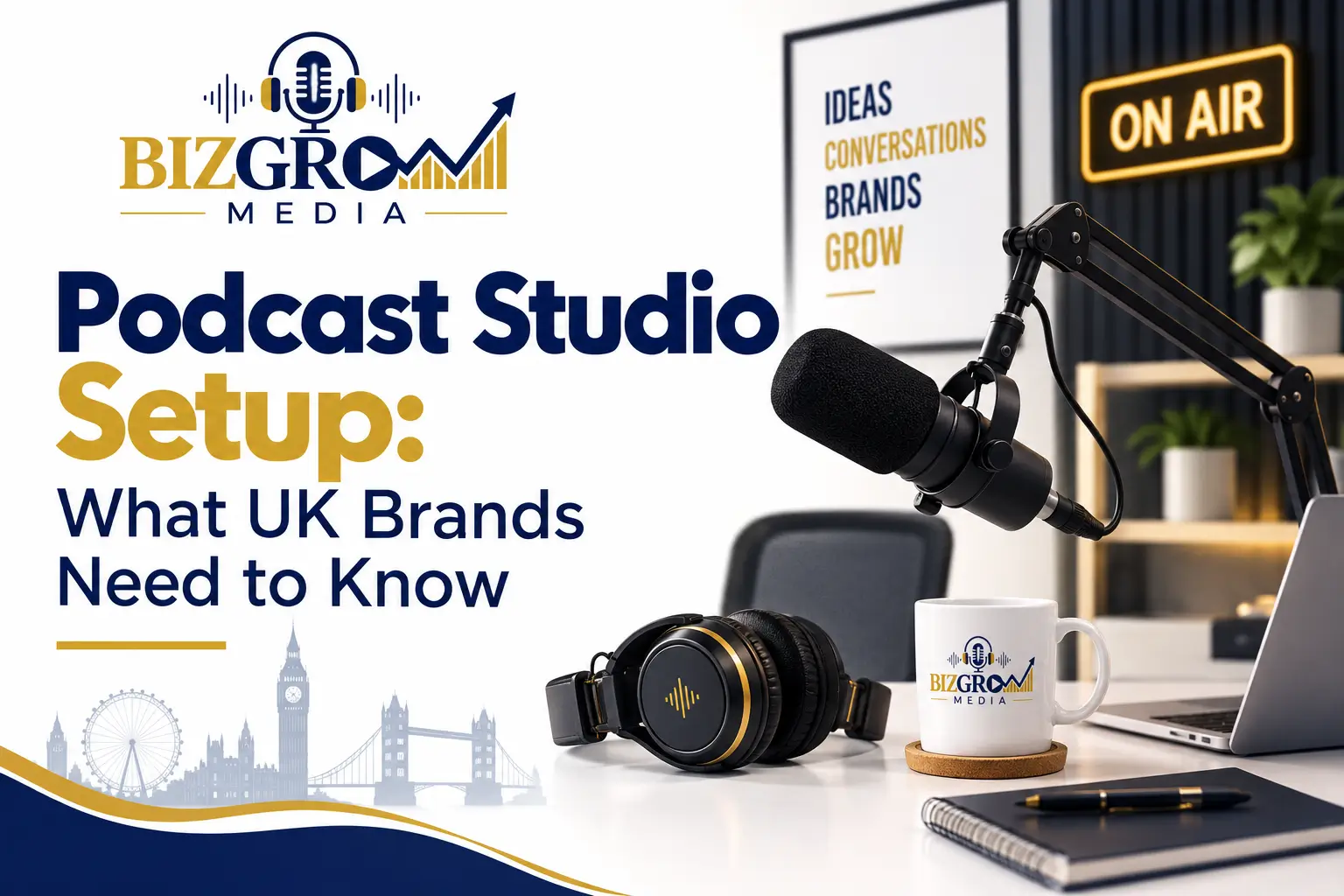
Walk into any marketing meeting this year and someone will mention podcasts. It’s not hype anymore. UK brands, from finance firms to small local businesses, are quietly building out studios and putting their founders in front of a mic.
The problem is, most of them get the setup wrong the first time. Not because they lack ideas, but because nobody told them what actually matters before you hit record.
That’s what this guide is for.
Why UK Brands Are Investing in Podcast Studios
There’s a simple reason podcasts work so well for brands right now. They feel personal. A 30-minute conversation does something a polished ad campaign can’t it lets people hear how you actually think.
That shift in trust matters more than most marketing teams realise. Add to that the fact that one recording session can be chopped into weeks of social content, and it’s easy to see why podcasts have become a serious line item in UK marketing budgets rather than a side project.
None of that works, though, if the sound is bad. A great conversation recorded badly still gets skipped.
What Makes a Podcast Studio Look Professional?
Honestly, it’s rarely the expensive gear people notice first. It’s the small stuff a background that isn’t cluttered, lighting that doesn’t wash someone out, a desk that doesn’t look like it’s been borrowed from a spare room in a hurry.
People form an opinion about your content within seconds of pressing play. If the visuals feel messy, viewers assume the substance will be too, even before anyone’s said a word.
Consistency helps here more than any single prop. Same colours, same layout, same feel every episode. That’s what starts to build recognition.
Podcast Studio Equipment: What Do You Really Need?
You don’t need to buy everything at once, and honestly, most brands overspend before they’ve even recorded a single episode.
Start with the basics:
- A decent microphone USB is fine to begin with
- Headphones so you can actually monitor the sound
- Simple lighting, even just a ring light
- A camera, if video’s part of the plan
That’s genuinely enough to get started. A second camera angle, better lighting, acoustic panels — all of that can wait until the show’s proven itself worth the extra spend.
How to Create a Podcast Studio That Builds Brand Trust
Trust builds slowly, through repetition. Same voice, same quality, episode after episode. That’s really the whole game.
A consistent recording space helps more than people expect lighting stays the same, sound stays the same, and guests relax faster because the room already feels familiar to you, even on their first visit.
Little things carry weight too. A branded backdrop that isn’t overdone. An intro that doesn’t change every few weeks. None of it feels dramatic on its own, but together it tells people this is a serious, ongoing thing, not a one-off experiment.
Podcast Studio Setup: What Does It Actually Cost?
This is usually the first question brands ask, and fair enough.
Truthfully, it depends a lot on your approach. Building your own space costs differently than hiring one for a session, and video adds another layer on top of audio-only setups. There isn’t one number that fits everyone.
What most brands realise once they’ve done a few episodes is that the value comes back fast. A studio session doesn’t just produce one podcast it produces weeks of content across several platforms. BizGrow Media helps UK brands work out a setup that actually matches how often they’ll record, rather than overbuilding on day one.
Should You Build a Podcast Studio or Hire One?
Depends entirely on how often you’re planning to show up and record.
If you’ll be recording weekly, building your own space usually makes more sense long term — you get full control and no booking hassle. If you’re testing the format, or only recording occasionally, hiring a studio is the smarter move. You get proper equipment and someone to handle the technical side, without committing to a room full of gear you might not use again.
A lot of brands actually do both hire first to prove the concept, then build once the podcast’s earned its place in the marketing plan.
How to Choose the Right Podcast Studio in the UK
Not every studio offers the same thing, and it’s worth checking before you book rather than after.
Ask whether they handle video as well as audio. Check the room’s actually soundproofed and not just “quiet-ish.” Find out if there’s a producer or engineer on hand, and whether they’ll help with editing afterwards or just hand you a raw file and wish you luck.
A good studio does more than press record. It should shape the episode into something worth publishing.
Why Audio Quality Can Make or Break Your Podcast
People forgive a slow intro. They almost never forgive bad sound.
Hiss in the background, an echo that makes every sentence sound distant, volume that jumps around between speakers any of that is enough to make someone close the tab, regardless of how good the conversation actually was.
The fix isn’t complicated. Record somewhere soft and quiet, keep the mic close, and skip rooms with bare walls or high ceilings if you can help it. Clean audio, more than anything else, is what makes a brand sound established rather than amateur.
How to Turn One Podcast Into Weeks of Content
This is where a proper studio setup really earns its keep. One recording session shouldn’t just give you one episode it should give you a month of material.
Pull short clips for Instagram and TikTok. Turn a good quote into a LinkedIn graphic. Write a blog post off the back of the conversation, like this one. The Reels vs Podcasts argument gets thrown around a lot online, but honestly, it’s the wrong framing they work best feeding each other, not competing.
Good raw footage from a well-run studio makes all of this repurposing far less painful than trying to salvage clips from a shaky home recording.
Can a Podcast Studio Help Your Brand Get More Customers?
In a roundabout way, yes.
A podcast lets someone hear how you think before they’ve ever spoken to you directly. That’s a different kind of trust than an ad can build, and it tends to stick. Over time, listeners who’ve heard you answer their exact questions naturally, episode after episode, start showing up as leads without much of a push.
It’s slower than most marketing tactics. But it compounds in a way paid ads generally don’t.
What Should UK Brands Look for in a Podcast Studio?
Past the gear, it’s really about the support that comes with it. Does the team help plan the episode beforehand, or just hit record and hope? Will they handle editing, or is that on you? Do they actually understand your industry enough to ask useful questions during the conversation?
BizGrow Media’s Studio & Production service covers this end to end, so brands aren’t left figuring it out alone between setup, recording, and the edit.
How to Plan Your First Podcast Studio Setup
Planning upfront saves a lot of backtracking later.
Decide on a format first solo, interview, panel. Then figure out whether video’s part of the plan or if audio-only suits the show better. Pick a space you can record in consistently, list out only the equipment you genuinely need, and try to plan your first four episodes before recording any of them.
Batching those early episodes takes a lot of pressure off. You’re not scrambling for a topic every single week.
Common Podcast Studio Setup Mistakes to Avoid
Most mistakes come down to moving too fast, or spending too early.
Recording in an untreated, echoey room is probably the biggest one. Buying expensive gear before the format’s even proven itself is another. Inconsistent episode lengths, no lighting at all, publishing without any real content plan these all quietly undercut a podcast that might otherwise be solid.
Fixing the basics early saves months of frustration down the line.
Is a Podcast Studio Worth the Investment for Your Brand?
For most UK brands trying to build real authority, yes but only if you’re prepared to stay consistent with it.
One episode won’t do much on its own. Twenty episodes, recorded properly and shared with some strategy behind them, absolutely will. That’s usually where things click.
BizGrow Media’s Content Engine and Authority Builder services exist for exactly this turning one studio session into an ongoing content strategy, rather than a single episode that sits there unnoticed.
Frequently Asked Questions
What equipment do I need for a podcast studio setup?
You need a good microphone, headphones, and recording software to start. Add lighting and a camera later if you want video.
How much does a podcast studio setup cost in the UK?
Costs vary a lot depending on whether you build your own space or hire one. It’s best to plan based on your recording frequency and goals.
Can I set up a podcast studio at home?
Yes, many brands start at home with basic equipment. A quiet, soft-furnished room works well for early episodes.
How long does it take to set up a podcast studio?
A simple home setup can be ready in a day or two. Professional studios can be booked and used almost immediately.
Should I hire a podcast studio or build my own?
Hire one if you’re recording occasionally or testing the format. Build your own if you plan to record regularly.
Conclusion: Build a Podcast Studio That Works for Your Brand
None of this needs to be complicated. Start small, get the audio right, and show up consistently. That’s really the whole formula.
Whether you build your own space or hire one for now, the aim stays the same sound professional, build trust, and turn each conversation into content people actually want to hear.
If you’re ready to get started, BizGrow Media can help plan and produce your podcast from scratch. Visit bizgrowmedia.co.uk to see how their Studio & Production and Growth Engine services support UK brands at every stage.