Picture this. You spend £2,000 on ads. You get thousands of clicks. And almost nobody buys.
Sound familiar?
It’s not your product. It’s not even your ad copy. It’s that you’re shouting the same message at everyone, hoping the right people happen to be listening.
Here’s the fix that most businesses skip: talk to smaller, specific groups instead of “everyone.”
Segmented campaigns can drive up to 760% more revenue than generic, one-size-fits-all marketing. That’s not a typo. That’s the real gap between businesses that grow and businesses that just spend.
Let’s break down exactly what this means, and how to actually use it.
What Is Market Segmentation and Why Does It Matter for Businesses?
Think about two people. One is 22, lives in a flat share, and shops on impulse. The other is 45, has kids, and researches everything before buying.
Would you sell to them the exact same way? Of course not.
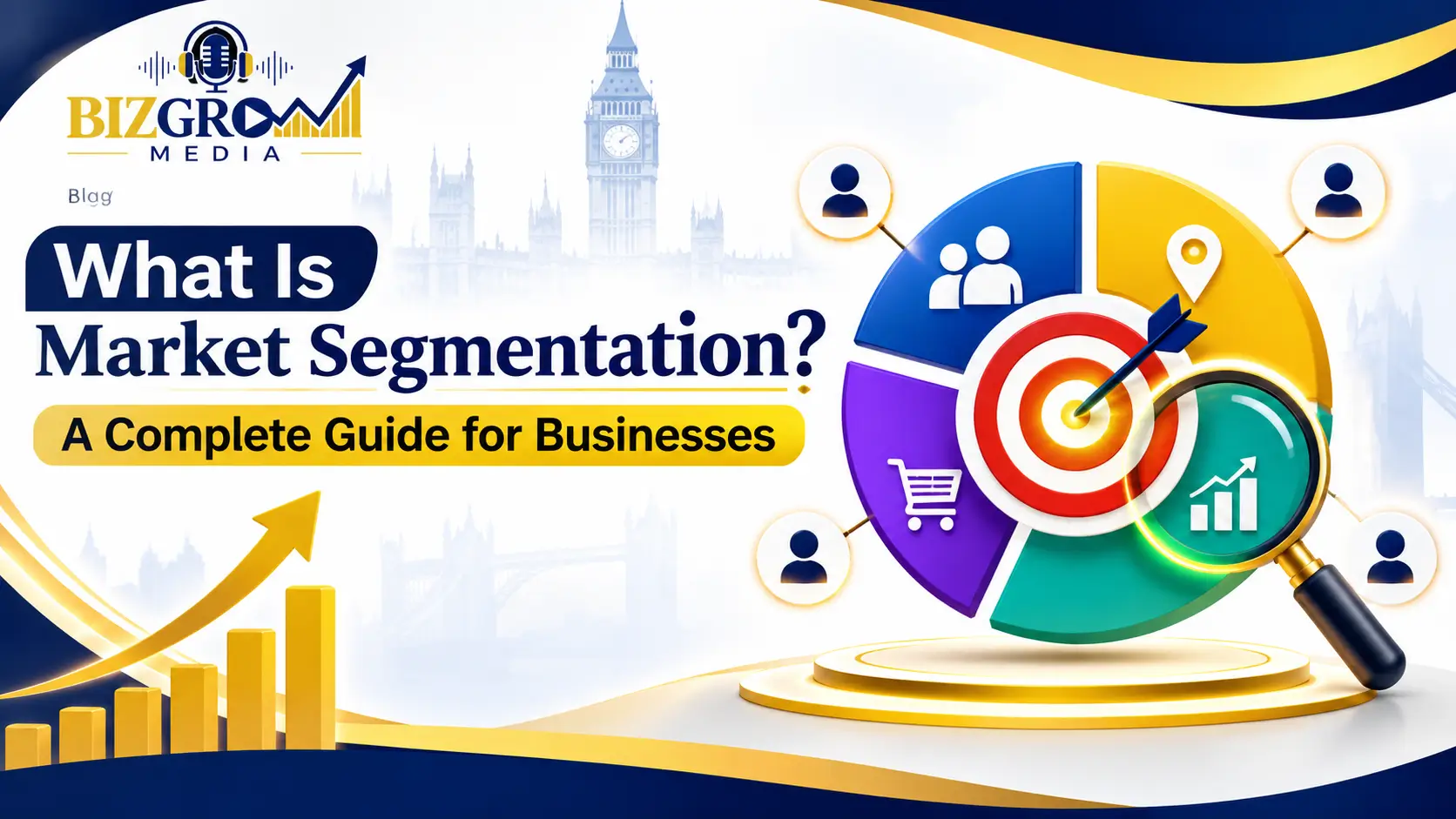
This idea is simply about splitting your audience into smaller groups based on what they actually have in common. Age, location, habits, income, interests.
Once you know your groups, everything gets sharper:
• Your ads stop feeling random
• Your message finally sounds like it’s speaking to someone, not everyone
• Your budget stops leaking into clicks that were never going to convert
A raincoat brand doesn’t run the same campaign in Manchester and Marbella. Same product. Different weather, different message.
This is exactly the kind of thinking BizGrow Media builds into every campaign they run. Not guesswork. Not templates. Real strategy based on who your customers actually are.
You can see their approach for yourself at bizgrowmedia.co.uk.
What are the main types of market segmentation?
There are lots of ways to segment your audience. Most businesses blend a few of these together:
1. Demographic
Age, gender, income, education. Simple, and a solid starting point for most brands.
2. Geographic
Where people live. City versus countryside can completely change buying habits.
3. Psychographic
Lifestyle, values, what people actually care about. This one takes real effort, but it’s powerful.
4. Behavioural
What people do, not who they are. Purchase history, browsing habits, what makes them click “buy.”
5. Firmographic
For B2B brands. Grouped by company size, industry, and revenue instead of individual traits.
Most brands don’t pick just one. They stack two or three to build a sharper, more useful picture.
What Are the Benefits of Market Segmentation for Businesses?
Here’s where it actually pays off. Once you stop marketing to “everyone” and start marketing to someone specific, the numbers shift fast:
Better clicks – Behaviour-based targeting drives up to 74% more clicks than generic sends
Bigger spend per customer – Personalised experiences often push customer spending up by around 38%
Loyalty that sticks – People remember brands that “get” them
Less wasted budget – Every pound works harder when it’s aimed properly
Room competitors miss – You spot gaps in the market before anyone else notices them
There’s also a trend worth watching closely right now: podcasts. Brands are ditching the polished, scripted ad and switching to short, honest podcast-style clips instead. Real conversations. Real faces. It’s becoming one of the fastest ways to build brand awareness in 2026, because people trust a real voice more than a perfect script.
How to Build a Successful Market Segmentation Strategy?
You don’t need to be a data science major to do this. You need a clear process.
1. Start with real data
Surveys, website analytics, past sales. Not assumptions.
2. Pick the right grouping method
Choose whichever type (or mix) actually fits your business.
3. Don’t overdo it
Three to seven groups is usually the sweet spot. More than that, and your budget gets stretched too thin.
4. Speak differently to each group
Same brand voice, different angle for each segment.
5. Revisit it often
People change. Markets shift. Review your groups at least once a year.
Most business owners know they ought to be doing this. Very few actually have the time to sit and analyse it properly. That’s the exact gap BizGrow Media fills, turning messy customer data into a strategy you can actually use.
The businesses winning right now aren’t the ones with the biggest budgets. They’re the ones who know exactly who they’re talking to.
You don’t need to fix everything today. Pick one group. Speak directly to them. Watch what happens.
Frequently Asked Questions
1. Is this only for big companies with big budgets?
No. Small businesses often benefit the most because every pound needs to count.
2. How many audience groups should I create?
Stick to three to seven. Too many spreads your resources too thin.
3. How often should this be reviewed?
At least once a year, or sooner if customer behaviour changes noticeably.
4. Does this apply to B2B companies too?
Yes. B2B brands usually group by company size, industry, and who makes the buying decisions.
5. Do I need fancy tools to start?
No. Basic analytics and a simple customer survey are enough to get moving.