A shaky clip, muffled sound and a message nobody understands. Your customer has already scrolled away, and they remember your brand for the wrong reason.
Video is now part of almost every marketing plan. 2026 State of Video Marketing report found that 91% of businesses use it. The same report found that 89% of consumers say video quality affects how much they trust a brand.
So it’s no longer enough to just post something. Poor video production can push people away before they read a single word about what you sell.
In this guide, we look at five common mistakes that hurt brands across the UK. You’ll also see how to avoid each one.
Why Video Quality Matters for Your Brand’s Success
People judge fast. A video gets a few seconds to prove you’re worth their time.
If it looks careless, viewers don’t think “they’re busy.” They think “they don’t care.” That feeling sticks. It spreads to your products, your service and your team.
Good video content does the opposite. It shows you’re organised, confident and serious about your work. It gives strangers a reason to trust you before they ever speak to you.
Wyzowl’s report also showed that 85% of people have been convinced to buy something after watching a video. Video can win sales. It can lose them too.
Here’s the part many businesses miss. Quality doesn’t mean big budgets or fancy effects. It means clear sound, steady footage, a simple message and a video made for the right person.
Get those right, and your brand video works hard for you. Get them wrong, and it quietly works against you.
1. Poor Video Quality That Damages Your Brand Image
This is the mistake people notice first. Blurry footage, dark rooms, shaky hands. It takes seconds to spot and a long time to forget.
How Low-Quality Visuals Affect Customer Trust
Think about how you shop. You land on a company’s page, press play and the video looks grainy and awkward. What do you assume about their service?
Most people assume it will be the same. Rightly or wrongly, the quality of your video becomes a stand-in for the quality of your work.
That’s a big problem for small and mid-sized UK firms. Often the video is the very first thing a new customer sees. It might be a social clip, a homepage intro or an ad. If that first impression feels cheap, you may never get a second one.
There’s a hidden cost here too. A weak video doesn’t just fail quietly. It can make people less likely to remember you, share you or call you.
Common signs of poor quality include:
- Pixelated or blurry footage
- Wrong framing, with heads cut off or too much empty space
- Cluttered backgrounds
- Logos and text that are hard to read
Why Professional Production Makes a Difference
A trained crew sees things you stop noticing. They check the background, the framing, the camera settings and the light. They know how a shot will look on a phone screen, a laptop and a big monitor.
They also bring the right gear. Good cameras, proper lenses and steady rigs make a real difference. But the biggest gain is experience. A professional knows what to fix before the camera starts rolling.
That saves time, and it saves you from the nasty surprise of finding a problem after the shoot is done.
Professional video doesn’t need to feel stiff or corporate. The best work feels natural and still looks sharp. That balance is hard to hit alone, and it’s where an experienced team earns its place.
2. Lack of a Clear Message and Brand Story
A beautiful video with no point is still a bad video. Viewers finish it and think, “So what was that about?”
Creating Videos Without a Defined Purpose
Many businesses make a video because a competitor did. Or because someone said, “We need video.” Nobody stops to ask what it should achieve.
The result is a clip that tries to say everything. It lists services, shows the office, thanks the team and ends with a vague logo. Viewers don’t know what to feel or what to do next.
Before you film anything, answer three simple questions:
- Who is this video for?
- What should they understand after watching?
- What do we want them to do next?
If you can’t answer them in one sentence each, you’re not ready to shoot. Fixing this on paper is far easier than fixing it in the edit.
One video, one job. That’s a good rule. A video meant to build awareness shouldn’t also try to close a sale in the same ninety seconds.
How Brand Storytelling Makes Your Message Memorable
Facts fade. Stories stay.
Brand storytelling is simply showing who you are, why you do what you do and how you help real people. It can be a customer’s problem you solved. It can be the reason you started the business. It can be a day in the life of your team.
A good story has a beginning, a bit of tension and a clear ending. The viewer sees themselves in it. That’s when a video stops being an advert and starts being a connection.
Your story also keeps your look and tone consistent. When every video feels like it comes from the same brand, people begin to recognise you. Recognition is a quiet form of trust.
3. Ignoring Your Target Audience
You might love your video. That doesn’t mean your customers will.
Creating Content That Fails to Connect With Your Ideal Customers
A common trap is making videos for yourself. The language is full of industry jargon. The jokes only land with the team. The topics are what the boss finds interesting.
Meanwhile the customer is asking something simple: “Will this help me?”
If the answer isn’t clear in the first few seconds, they leave.
Audience mismatch shows up in small ways:
- A serious tone for a young, casual audience
- Long, slow videos for people watching on a commute
- Technical talk for buyers who want plain answers
- Ignoring local details that UK viewers care about
Take a UK accountancy firm, for example. A fast, trendy clip aimed at students would miss the mark if its real clients are busy business owners. Those owners want calm, clear advice. Same firm, different audience, different video.
How to Make Videos That Speak to Your Audience’s Needs
Start with real questions. What do customers ask on calls? What do they search for? What worries them before they buy?
Your sales and support teams already know. Ask them. Their answers are a goldmine of video ideas.
Then match the video to where people will see it. A short, punchy clip suits social media. A longer, calmer explainer suits your website. A testimonial works well near a contact form.
Speak the way your customers speak. Use plain words. Show faces that feel familiar. Mention places, problems and moments they know.
When viewers think “that’s exactly my situation,” they lean in. That’s the goal of every good piece of video marketing.
4. Weak Audio, Lighting, and Editing
People will forgive a plain background. They won’t forgive sound they can’t hear.
How Poor Sound and Lighting Reduce Viewer Engagement
Audio is the most overlooked part of video. A phone microphone in a big room picks up echoes, traffic and chair squeaks. The speaker sounds far away and the message gets lost.
Viewers tend to give up quickly when sound is bad. They’d rather close the tab than strain to listen.
Lighting works the same way. A dark face looks untrustworthy. Harsh shadows look unflattering. Mixed light from a window and a ceiling lamp makes skin look odd and colours look off.
Simple fixes make a big difference:
- Use a proper microphone close to the speaker
- Film in a quiet, soft-furnished room
- Face a soft light source rather than sitting in front of a window
- Test the sound before every shoot
None of this is glamorous. But it’s the difference between a video people watch to the end and one they abandon in ten seconds.
The Role of Professional Editing in High-Impact Videos
Editing is where a video is really made. Raw footage is just material.
A skilled editor cuts the pauses, fixes the pace and keeps the story moving. They add captions so people can follow along with the sound off, which matters because many people watch on mute. They balance the audio, correct the colour and add graphics that fit your brand.
Poor editing is easy to spot. Jumpy cuts, clashing fonts, loud music over speech and a slow start. Each one chips away at how professional you look.
Good video editing, on the other hand, goes unnoticed. The viewer simply feels the video flows. That’s the aim. They remember your message, not the technique.
5. Focusing on Views Instead of Business Results
A video with 50,000 views sounds great. But what did those views do for your business?
Why Viral Videos Do Not Always Generate Leads
Chasing views is tempting. The numbers are easy to see and easy to share in a meeting.
But views only tell you that people pressed play. They don’t tell you who watched, whether they cared or whether any of them became a customer.
A funny clip might travel far and reach people who’ll never buy from you. Meanwhile, a quiet video answering one common customer question might reach only 800 people and bring in several real enquiries.
Which one helped the business more? Usually the second.
Chasing trends can also pull you away from your brand. If you drop your tone, your values or your expertise just to get attention, you may gain viewers and lose focus.
Turning Video Content Into Brand Awareness and Business Growth
Set goals before you film. Make them specific. More enquiries from your website. More sign-ups for a webinar. More people remembering your name when they need your service.
Then track what matters:
- Watch time, to see if people stay
- Clicks to your website
- Enquiries and form fills
- Comments and messages from real prospects
Add a clear next step to every video. Tell people where to go, what to book or what to read next. Without it, even a great video ends with a shrug.
Over time, a steady run of useful videos does more than one viral hit ever could. It builds familiarity. People see you again and again, and by the time they need what you offer, you’re the name they already know.
How Professional Video Production Helps You Avoid These Mistakes
Each of the five mistakes comes down to the same thing: planning, skill and honest attention to detail. That’s what a professional team brings.
At BizGrow Media, we help businesses create videos that look right, sound right and say the right thing. Our Studio & Production service covers the full journey, from shaping the idea to filming and editing the final video in a professional setting. You don’t have to juggle cameras, lighting, sound and software yourself.
We also look past the shoot. Our wider services are built to help your content keep working after it’s published:
- Studio & Production: planning, filming and editing in a professional studio setup
- Content Engine: a steady flow of content so your brand stays visible
- Authority Builder: content that positions you as a trusted voice in your field
- Growth Engine: a focus on turning attention into real business growth
If you want a team that treats your brand as carefully as you do, we’re a strong choice for UK businesses that want videos with purpose. You can see more about what we do at bizgrowmedia.co.uk.
Why UK Businesses Need a Strategic Video Content Plan
One good video is a start. But a plan is what turns video into a habit your customers can rely on.
A video content plan answers a few simple things. What topics will you cover? Where will each video live? How often will you post? How will you measure success?
Without a plan, most businesses post in bursts. They make three videos in a month, then nothing for four months. The audience forgets them.
The UK market is busy. Whatever you sell, someone nearby sells something similar. Staying consistent is one of the easiest ways to stand out.
A good plan also makes your budget go further. When you know what you need for the next few months, you can film several videos in one session. That saves time, keeps the look consistent and cuts down on last-minute rushing.
Think about the whole customer journey too. Someone who’s just heard of you needs a short, friendly introduction. Someone comparing options needs a deeper explainer or a customer story. Someone ready to buy needs reassurance and a simple next step.
When your videos cover each stage, they work as a team rather than as lonely one-offs.
Create Videos That Build Trust, Authority, and Growth
Trust is the real prize. Everything covered above, from quality and story to audience and results, feeds into it.
Customers trust brands that look professional, speak clearly and show up regularly. They trust brands that seem to understand their problems. And they trust brands that back up their words with proof.
Video does all of this at once. It lets people see your face, hear your voice and feel your values. No paragraph of text can do that as quickly.
Authority follows trust. When people see you explaining things well, answering real questions and showing real work, they start to see you as the expert. Then growth follows naturally, because people prefer to buy from experts they already know.
So treat every video as a small piece of your reputation. Plan it, shoot it well and make sure it says something worth hearing.
Frequently Asked Questions About Video Production
What are the most common video production mistakes?
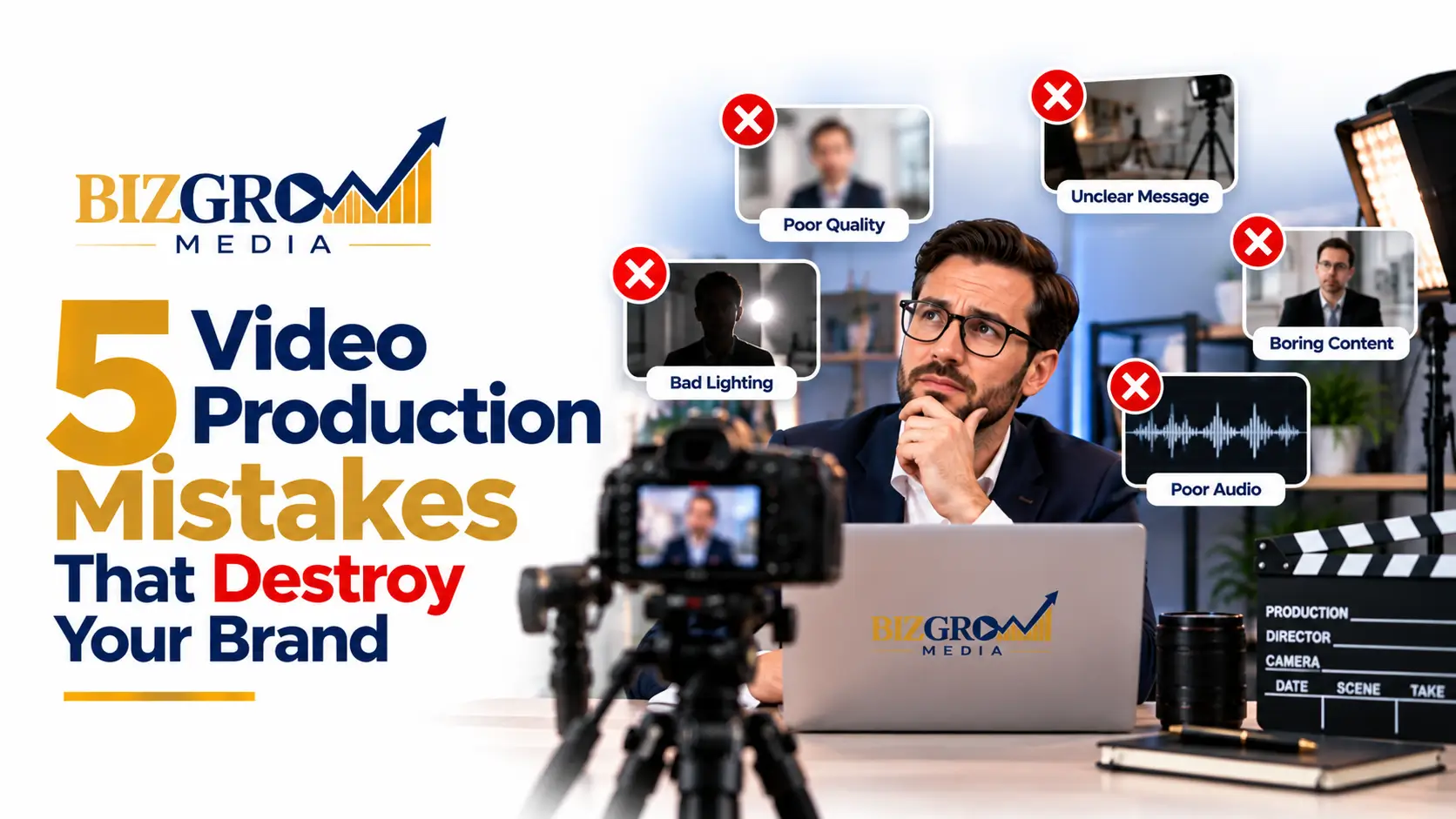
The big ones are poor visual quality, a weak message, ignoring the audience, bad sound and lighting, and chasing views over results. Each one can quickly weaken how people see your brand.
How does poor video quality affect a brand?
It makes viewers doubt your professionalism. Many people assume a rough video means rough service, so they leave and may not return.
Is professional video production worth the investment?
Yes, for most businesses. Professionals avoid common errors and create videos that build trust. That can lead to stronger enquiries and a better reputation over time.
How can businesses use video content to generate leads?
Make videos that answer real customer questions, then add a clear call to action. Share them on your website and social channels, and track enquiries rather than just views.
Why is a clear message important in video content?
A clear message tells viewers why they should care and what to do next. Without it, even a well-shot video gets forgotten quickly.
Final Thoughts: Make Every Video Count for Your Brand
Your videos speak for you when you’re not in the room. They shape first impressions, build or break trust and decide whether a stranger becomes a customer.
The five mistakes in this guide are all fixable. Aim for clean visuals. Know your message. Understand your audience. Get the sound, light and edit right. And measure success by results, not just views.
If you want to go a step further, think about adding a podcast to your content mix. A podcast lets your audience hear your ideas in full, builds familiarity week after week and gives you plenty of material to turn into short video clips. BizGrow Media offers a podcast service that fits neatly alongside your video work, so your brand’s voice stays consistent everywhere people find you.
Ready to make your next video count? Visit bizgrowmedia.co.uk and talk to the BizGrow Media team.